
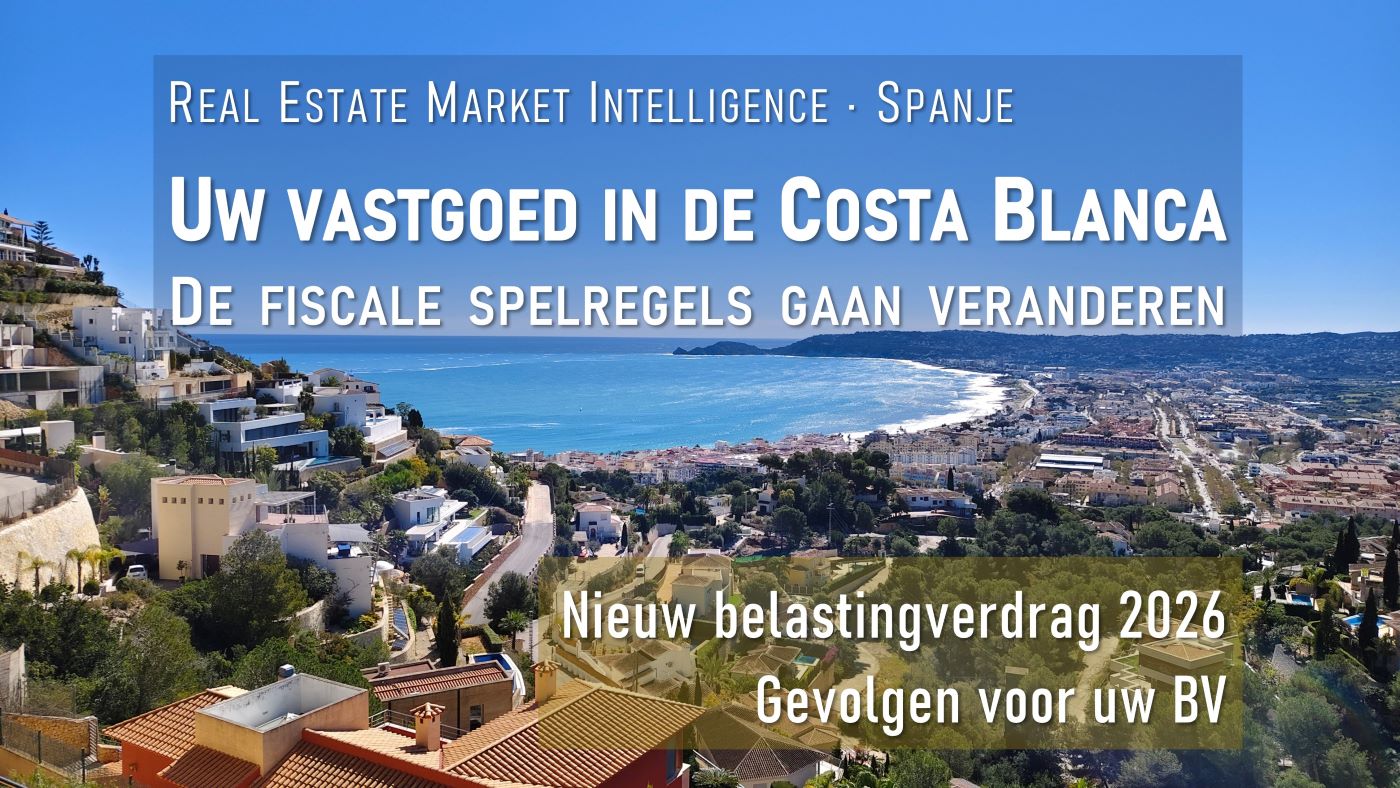
An important step has been taken: on 10 March 2026, the Spanish Council of Ministers authorised the formal signing of the new Spain-Netherlands tax treaty. Although final implementation is still to come, this decision marks the end of a tax era that had stood since 1971.
The shift at a glance
For decades, the tax route for Spanish property was clear: when the shares in a Dutch BV (private limited company) were sold, the gain was usually taxed in the Netherlands only. Thanks to the Dutch participation exemption (deelnemingsvrijstelling), this often resulted in a minimal effective tax burden.
The revision now agreed changes this principle fundamentally. In line with international standards (OECD BEPS), taxing rights will from now on be allocated to the state where the property is located, regardless of any foreign holding structure in between.
The critical threshold in the new tax treaty: 50%
At the heart of the change is a threshold. As soon as more than 50% of the value of a company’s shares derives (directly or indirectly) from Spanish real estate, Spain obtains the primary right to tax the capital gain on sale. Valuation is based on current market value.
A strategic window
While Spain has already formally authorised the new course, in the Netherlands the file is currently in a phase of procedural calm. Political attention in The Hague is focused on other complex dossiers, so the specific real estate clauses remain out of the media spotlight for now.
This gives you a unique window for a thorough review before the new rules officially take effect, expected on 1 January 2027.
What next?
A change in the tax architecture calls for a multidisciplinary approach that goes beyond the property transaction alone. What is at stake is the long-term viability of your entire structure.
Strategic guidance and portfolio analysis
A change in the tax landscape calls first and foremost for an objective valuation of your assets. In close cooperation with a qualified network of external tax specialists and lawyers, I provide a complete picture of your position. As your independent advisor, my focus is on evaluating your real estate assets and advising on the optimal course for your portfolio.
Should repositioning or a sale be desirable, I work exclusively with the global infrastructure of Berkshire Hathaway HomeServices. Through their specialised off-market service, I facilitate an extremely discreet process. Your property is not publicly promoted or listed on portals, but offered directly and confidentially to a select group of international investors within the Berkshire Hathaway network.
This synergy between my personal guidance and the execution power of a global institution guarantees you maximum privacy.
Considering a review of your property portfolio’s course?
Get in touch for a discreet evaluation of your assets.
Frequently asked questions about the new treaty
No. The Spanish Council of Ministers authorised the signing on 10 March 2026.
Actual implementation and ratification by both countries are still to follow, with entry into force expected on 1 January 2027.
A company (such as a Dutch BV) whose value derives more than 50%, directly or indirectly, from real estate located in Spain.
Yes. The tax change does not affect the method of sale. Through the specialised off-market service of Berkshire Hathaway HomeServices, a portfolio can be offered discreetly to selected investors, without a public listing.



Join The Discussion