

Real Estate Market Intelligence & Investment Advisor
Costa Blanca · Spain
International buyers arriving in Spain’s southeast tend to reach for one word: “Costa Blanca.”
It is a marketing label, and a good one (200 kilometers of coastline will do that).
But it isn’t an administrative reality, and it isn’t how prices, rental yields, or demographics actually behave here. That reality is governed by the province of Alicante and its nine comarcas (regional districts), and the comarca you choose will shape your purchase far more than the “Costa Blanca” label ever will.
A quick clarification, since I’ll use both terms in this series: “Costa Blanca North” and “Costa Blanca South” are the coastline’s marketing halves.
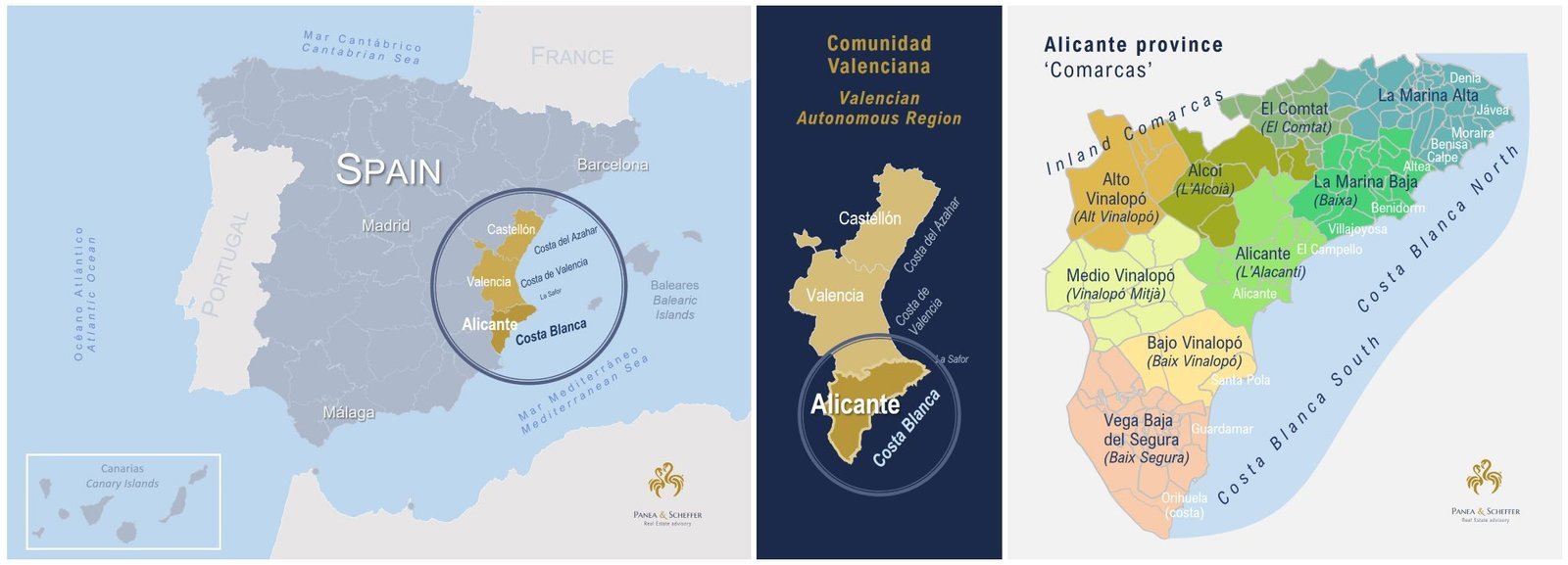
The nine comarcas below are the administrative units underneath them, five of which are coastal (Marina Alta, Marina Baixa, and part of Alicante and Vega Baja) and the rest inland.
This distinction matters because due diligence, planning regulations, and tax residency all follow the comarca and municipality, not the marketing label.
A province of contradictions
Alicante’s geography is genuinely unusual.
The coast holds one of the highest concentrations of Blue Flag beaches in Europe, with over 300 days of sunshine a year.
Twenty minutes inland, that same province becomes one of the most mountainous in Spain, with limestone sierras exceeding 1,000 meters.
The collision of mountain and sea produces microclimates that shift block by block: a coastal town with mild winter afternoons, and a mountain village half an hour away with cool alpine air, fertile valleys, and its own rhythm of seasons.
This diversity is also reflected in who lives here.
Alicante is the Spanish province with the highest proportion of foreign residents of any in the country: 23.3%, according to Instituto Nacional de Estadísticas – INE’s municipal register, as of 01/01/2024 (its most recent published figure), representing more than 180 nationalities.
It’s worth noting the trend, not just the snapshot: that share has been rising steadily, driven almost entirely by foreign-resident growth rather than domestic population change, and it’s a live area worth revisiting when the next INE update lands.
None of that changes the fact that real estate dynamics (entry prices, rental yields, demographic density) shift as sharply as the topography. That’s what this guide maps.
Getting here, and getting around
Part of what makes this province function as a year-round market, not just a summer one, is how well connected it is.
Two international airports serve the region: Alicante-Elche Miguel Hernández Airport in the south of the province and Valencia Airport to the north, both offering direct routes to major European cities.
Spain’s high-speed rail (AVE) network, among the most extensive in Europe, connects Alicante to Madrid and the country’s other main cities.
Internally, the province is served by an excellent network of motorways and dual carriageways (the AP-7 and A-7 running its length, with A-31, A-33, and A-70 branching inland), which is what makes comarcas like Vinalopó Mitjà or L’Alcoià a realistic 45-minute commute from the coast rather than a genuinely separate world.
And along the northern coastline, the “Trenet” (TRAM Metropolitano) runs from Alicante city up to Dénia, tracing the length of what’s marketed as Costa Blanca North and linking towns like Villajoyosa, Benidorm, Altea, Calpe, and Dénia without a car.
The economic base
Beyond tourism, which is the sector most visible to a visitor, Alicante’s economy is genuinely diversified, and that diversification matters for anyone evaluating the province as a place to hold assets, not just a place to holiday.
Services dominate provincial output, with tourism as its largest single component, but the province also carries one of Spain’s most concentrated manufacturing clusters: footwear and leather goods around Elda and Petrer, toy manufacturing around Ibi and the Foia de Castalla, and marble extraction and processing in the inland north.
Agriculture remains a genuine export engine, not a legacy sector, with citrus, wine (Monastrell, from the Vinalopó valleys), and other agri-food products consistently among the province’s top exports to the EU.
Construction and real estate have been the standout performers over the past two years, and Alicante’s technology and digital-services sector, anchored by Alicante Distrito Digital in the capital, is the fastest-growing addition to that mix.
I’ve deliberately left GDP and average-income figures out of this overview. They move quickly, they’re most meaningful comarca by comarca rather than as a province-wide average, and on their own they don’t tell a buyer much that the sector breakdown above doesn’t already say more usefully. I’ll bring in the relevant local figures (income levels, price-to-income ratios, construction permits) where they actually inform a decision, comarca by comarca, as this series continues.
The property landscape at a glance
Think of the province’s pricing as a pendulum.
High-demand, premium enclaves concentrate along the northern coastline.
The south delivers volume and affordability.
The inland comarcas reward buyers willing to trade proximity to the sea for space, value, and a slower pace.
Understanding where your priorities sit on that pendulum is the real starting point for any Alicante purchase, well before you look at a single listing.
The 9 Comarcas: Strategic Summaries
1. La Marina Alta · The established international enclave
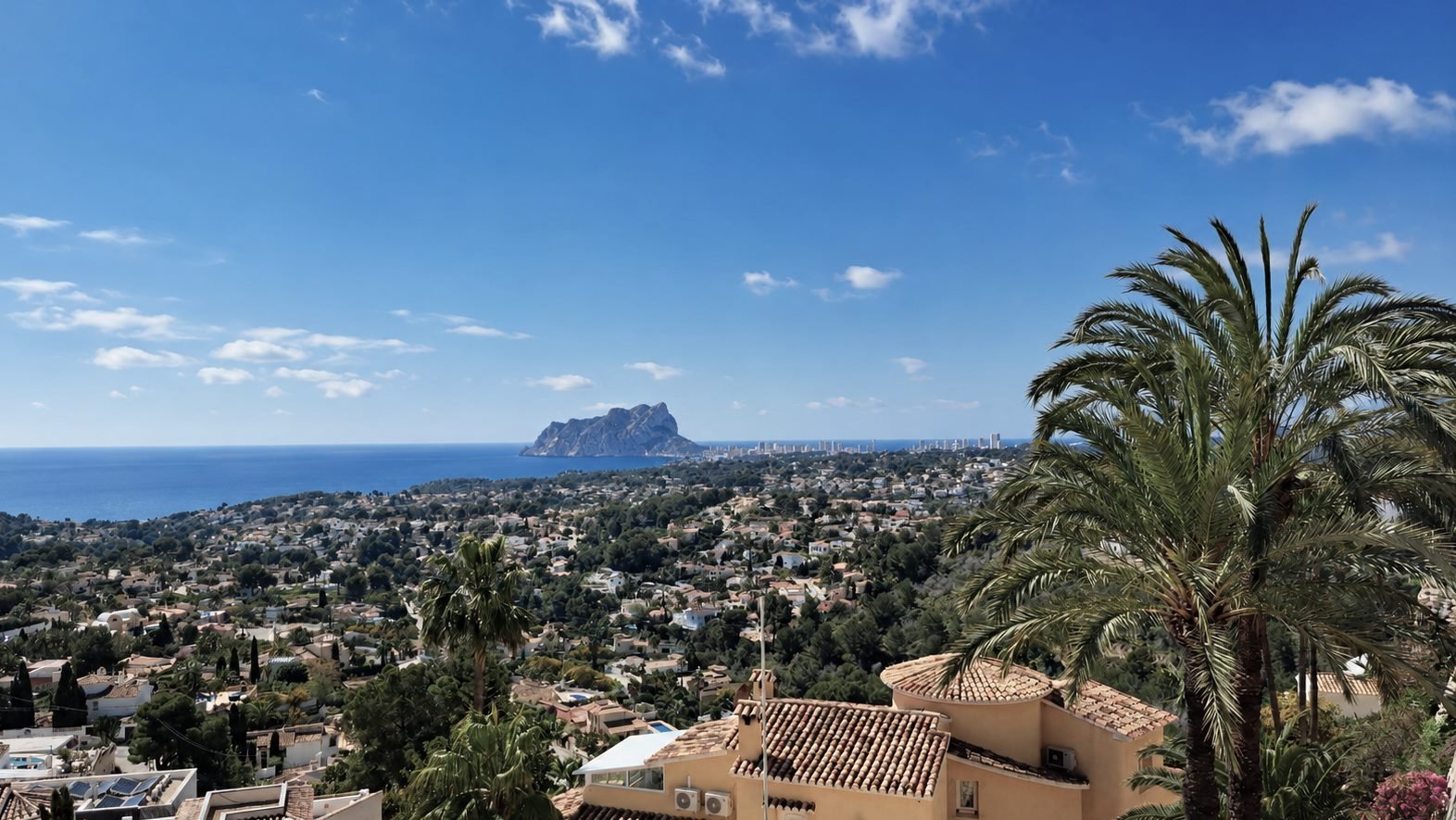
Centered on Dénia, Jávea, Moraira and Calpe, this comarca has the highest concentration of foreign residents in the province and the deepest track record of international ownership.
According to INE’s municipal register (01/01/2024), foreign residents make up 47.0% of Jávea, 53.1% of Calpe, and 28.6% of Dénia (all well above the provincial average of 23.3%).
Building restrictions around the Montgó Natural Park have kept high-rise development off the cliffs, which is precisely why the sea-view terrain here still holds value.
Inland, the comarca changes character entirely. The Jalón (Xaló) valley and villages like Alcalalí, Parcent, and Orba built their reputation on Moscatel and Monastrell vineyards, while Gata de Gorgos is still known for its traditional wickerwork. These interior valleys draw a different buyer than the coastline: fincas and country houses set among vineyards and orange groves, at a meaningful discount to the front-line coast, for buyers who want Marina Alta’s climate and infrastructure without the sea-view premium.
Market reality: liquid and premium:
Standard apartments range from the mid €200,000s to €800,000s; front-line villas with sea views comfortably clear €5M. This is the segment where scarcity of buildable land, not just demand, sets the ceiling.
2. La Marina Baja · High-rise, resort, and hidden valley
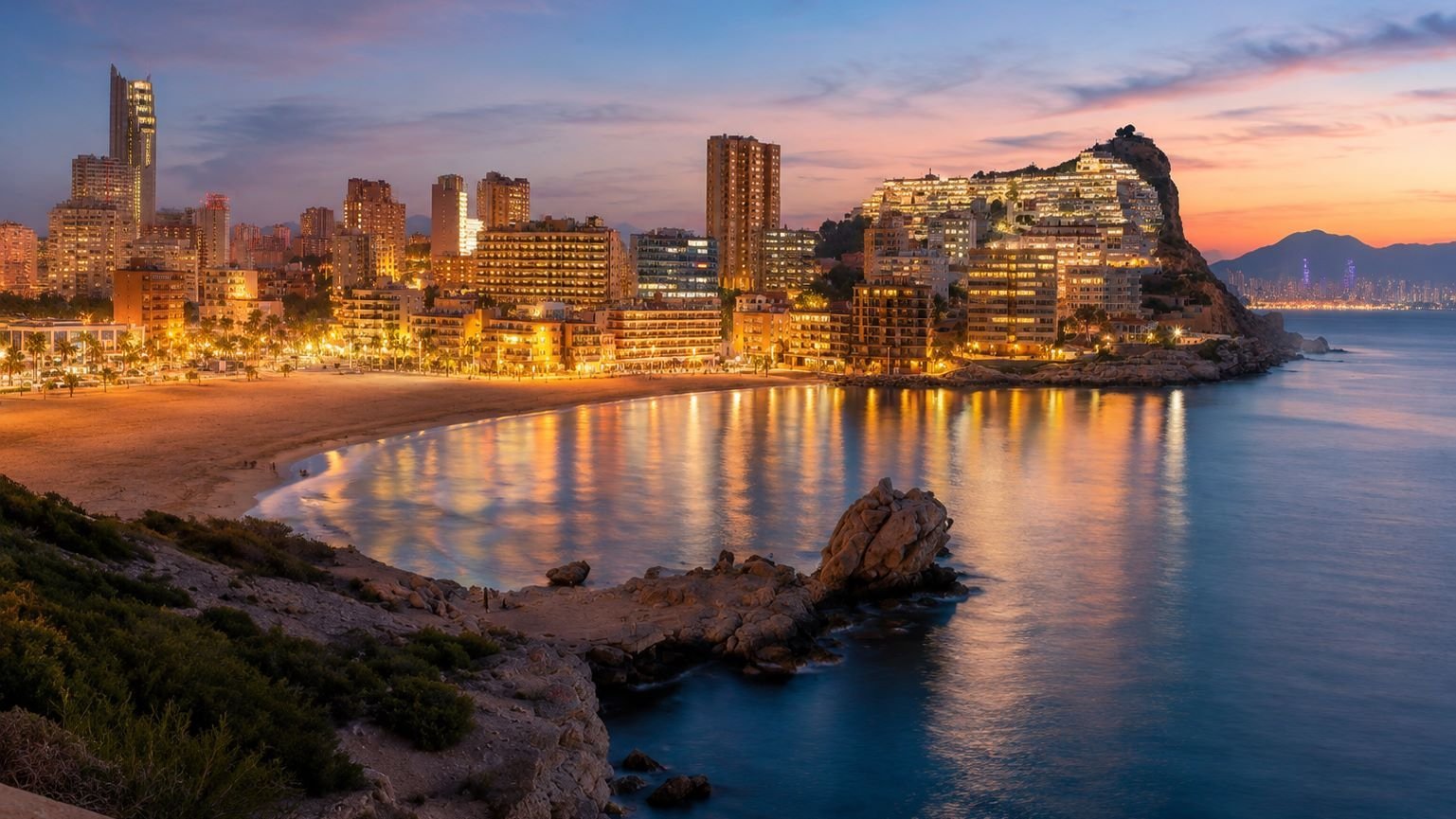
Home to Benidorm‘s skyline and Villajoyosa‘s fishermen’s houses, this comarca holds two markets at once: dense, high-yield vacation real estate on the coast, and quiet rural privacy a short drive inland.
Altea sits between those extremes, its whitewashed old town and blue-domed church anchoring what has long been the comarca’s most artistic and upscale coastal enclave, distinct from Benidorm’s density and Villajoyosa’s working-port character. Foreign residents make up 33.1% of Benidorm, 38.5% of Altea, and 23.6% of Villajoyosa (INE, 01/01/2024).
Market reality: genuinely split.
Benidorm and Finestrat offer high-rise and modern townhouse stock with strong vacation-rental yields.
Altea commands a premium for its old-town character and its more limited, design-conscious coastal and hillside properties, a market that behaves more like Marina Alta than like its immediate neighbors.
The interior, around Polop or the medieval village of Guadalest, appeals to buyers who want privacy in a restored finca and have no interest in rental income at all.
3. L’Alacantí · Urban and tech core
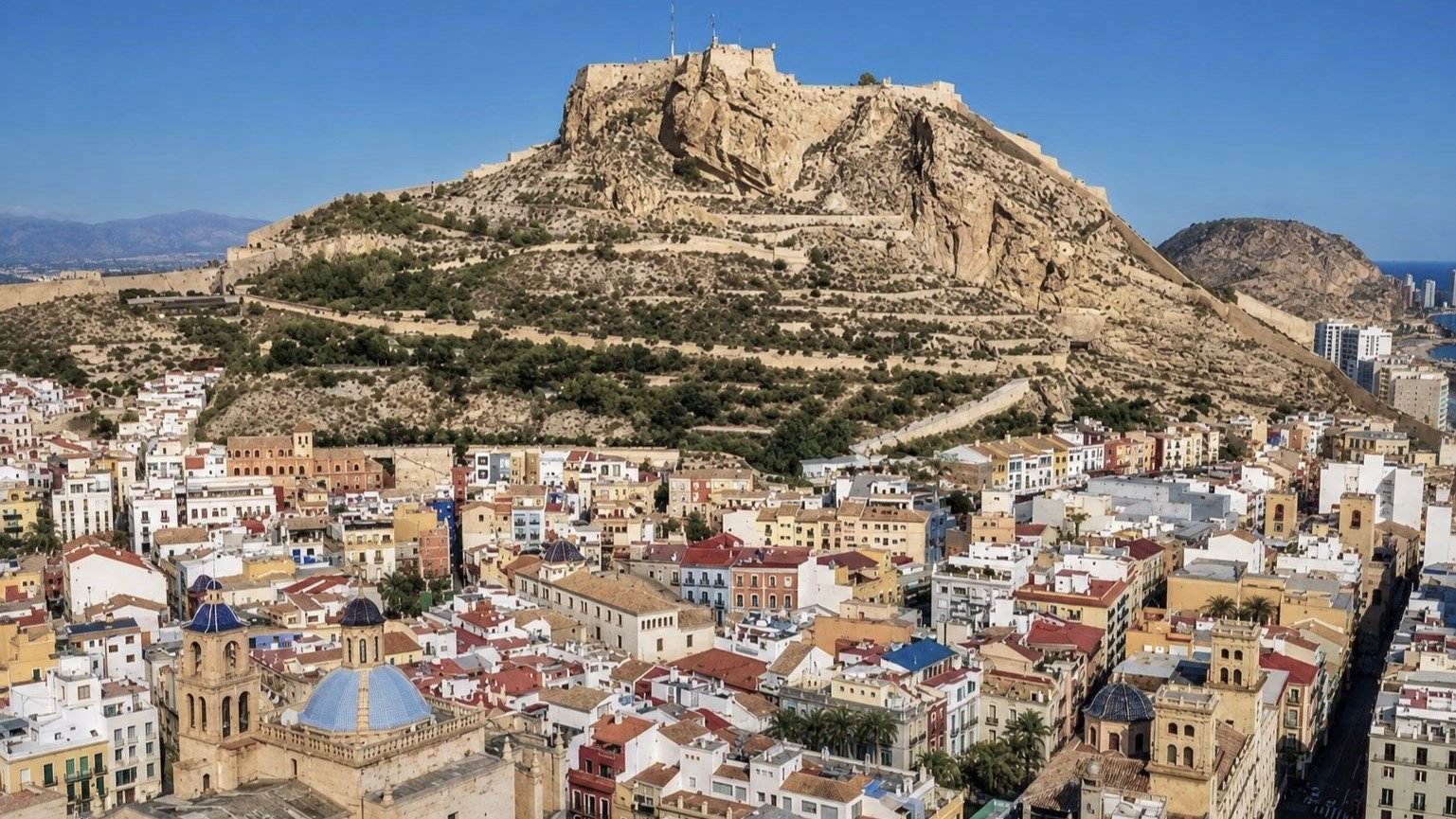
Home to Alicante city, the capital of the province, its historic Santa Bárbara castle, and San Juan beach, this comarca is shifting from a seasonal destination for national tourists to a year-round service and technology hub (Alicante Distrito Digital is one driver), which is pulling in remote professionals and corporate relocations alongside the traditional retiree and holiday-home buyer.
Foreign residents make up 19.4% of Alicante city and 21.3% of El Campello (INE, 01/01/2024), figures that understate the comarca’s international footprint precisely because it draws long-term, integrated residents rather than seasonal owners.
Market reality: demand from both local and international buyers.
Historic-center apartments generate strong rental returns; coastal pockets like El Campello offer upscale seaside living with direct tram access to the city and the Costa Blanca North.
4. El Baix Vinalopó · Access and everyday utility
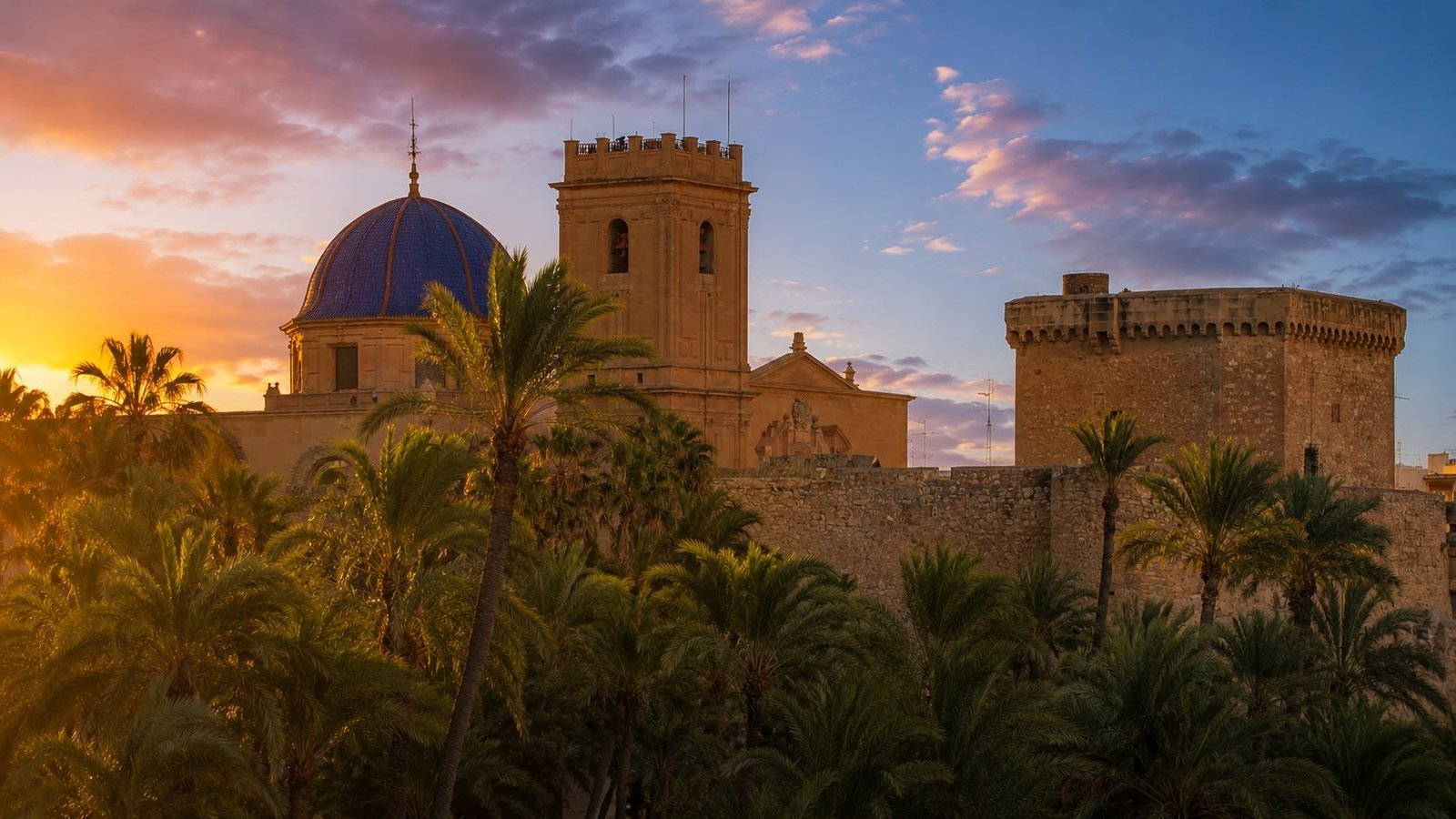
Built around Elche, known for its UNESCO-protected Palm Grove, and the fishing town of Santa Pola, this comarca also hosts Alicante-Elche Miguel Hernández Airport, the province’s main air gateway and a genuine factor in property values nearby.
Foreign residents represent 13.4% of Elche and 23.2% of Santa Pola (INE, 01/01/2024).
Market reality: practical rather than aspirational.
Santa Pola offers competitively priced beachfront property below the going rate further north, while Elche delivers authentic urban living without the seasonal crowding of the coast.
5. La Vega Baja del Segura · Scale and affordability
Anchored by historic Orihuela and coastal Torrevieja, this is the southern third of the province, built on a mix of large-scale residential tourism and citrus agriculture.
Foreign residents account for 36.1% of Orihuela and 47.6% of Torrevieja (INE, 01/01/2024), among the highest concentrations in the province.
Its pink salt lakes near Torrevieja aren’t just scenery; the microclimate they create has long attracted retirees and buyers relocating for health reasons.
Market reality: the most accessible price point in the province.
A large resale stock of holiday apartments starts under €120,000, while premium golf-resort developments (Las Colinas among them) reach up to €1.5M for smart-villas.
Volume, not scarcity, defines this comarca.
6. El Vinalopó Mitjà · The wine valley
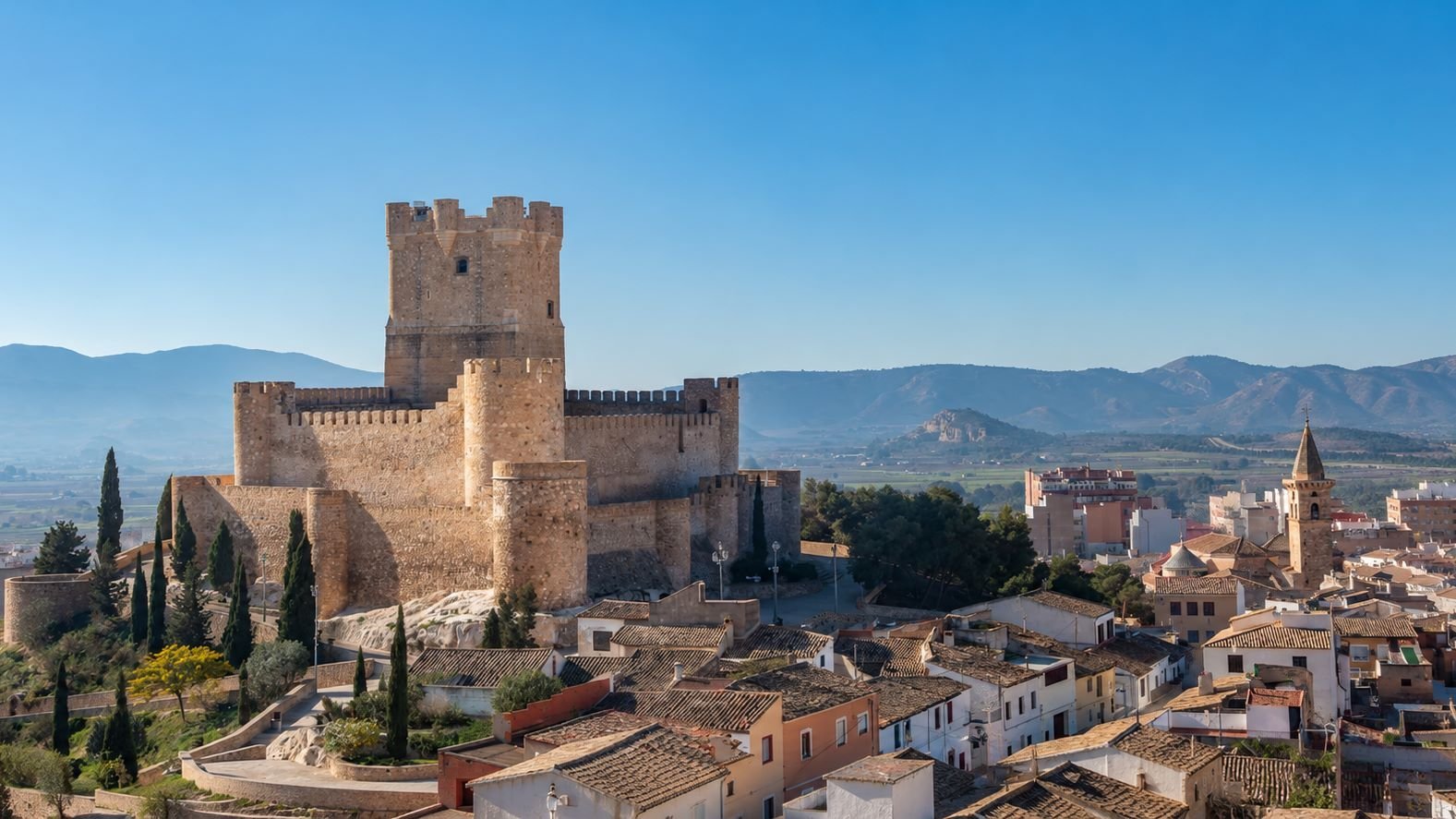
Inland along the Vinalopó river, towns like Elda, Petrer, and Monóvar combine a historic footwear-manufacturing base with serious Monastrell wine production and castle-town architecture.
Foreign residents remain a modest share of the population here (9.0% in Elda, 3.9% in Petrer, 9.8% in Monóvar, per INE 01/01/2024), reflecting a market still driven mainly by domestic buyers.
Market reality: significant value-appreciation potential for buyers prioritizing space over proximity to the coast.
Large country properties, historic townhouses, and working vineyards are available at a fraction of coastal per-square-meter pricing.
7. L’Alt Vinalopó · Land and isolation
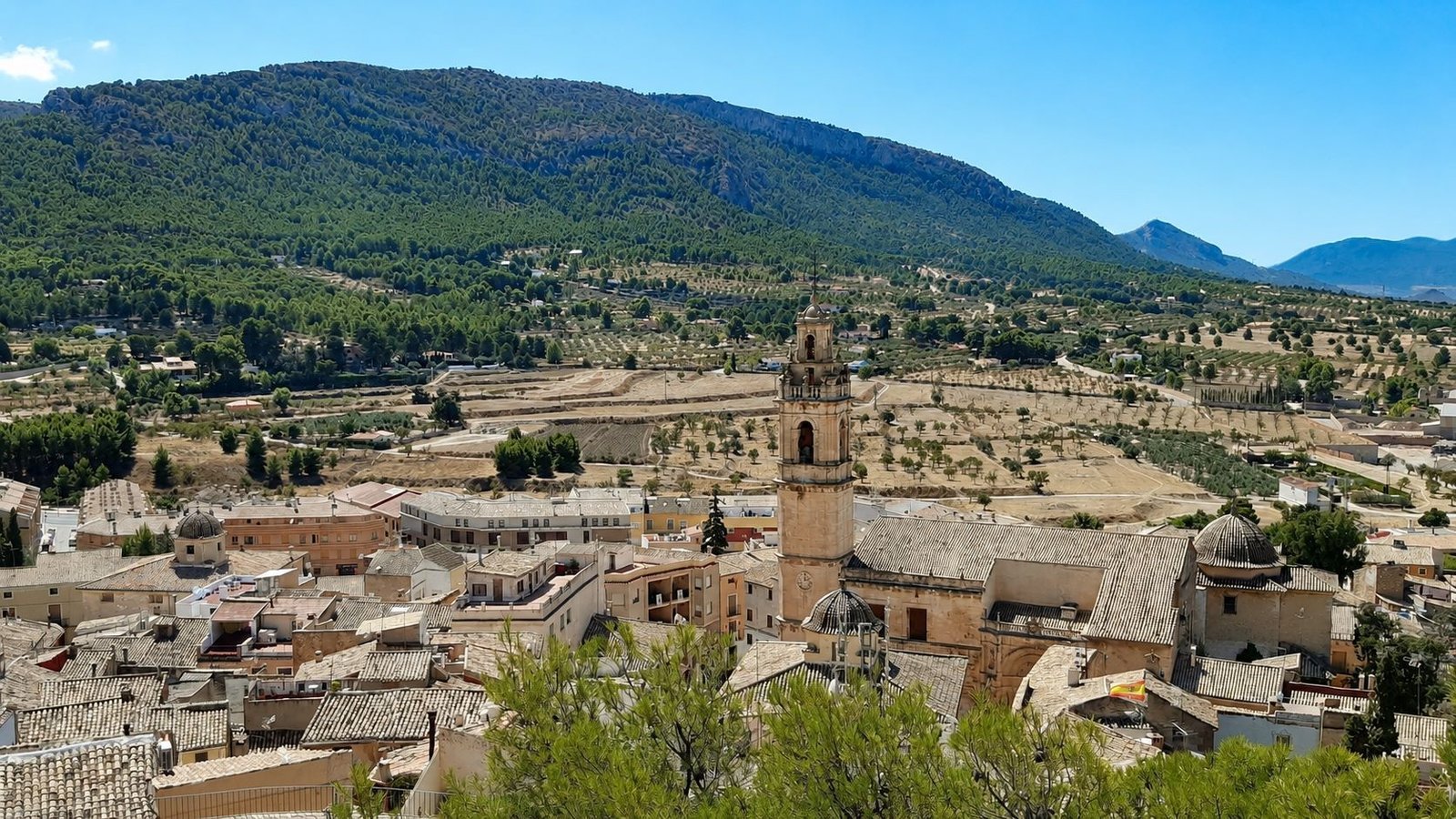
The province’s furthest inland comarca, bordering Castilla-La Mancha and centered on Villena, known for Bronze Age archaeological sites, solar energy installations, and open valleys of almond groves.
Villena’s foreign-resident share sits at 9.2% (INE, 01/01/2024), well below the coastal comarcas, consistent with a market oriented toward land and lifestyle rather than international resale demand.
Market reality: this is where acreage, not square meters, becomes the unit of value.
Off-grid properties and rustic conversions here can be acquired for what a modest semi-detached townhouse costs on the coast.
8. L’Alcoià · The Mountain comarca
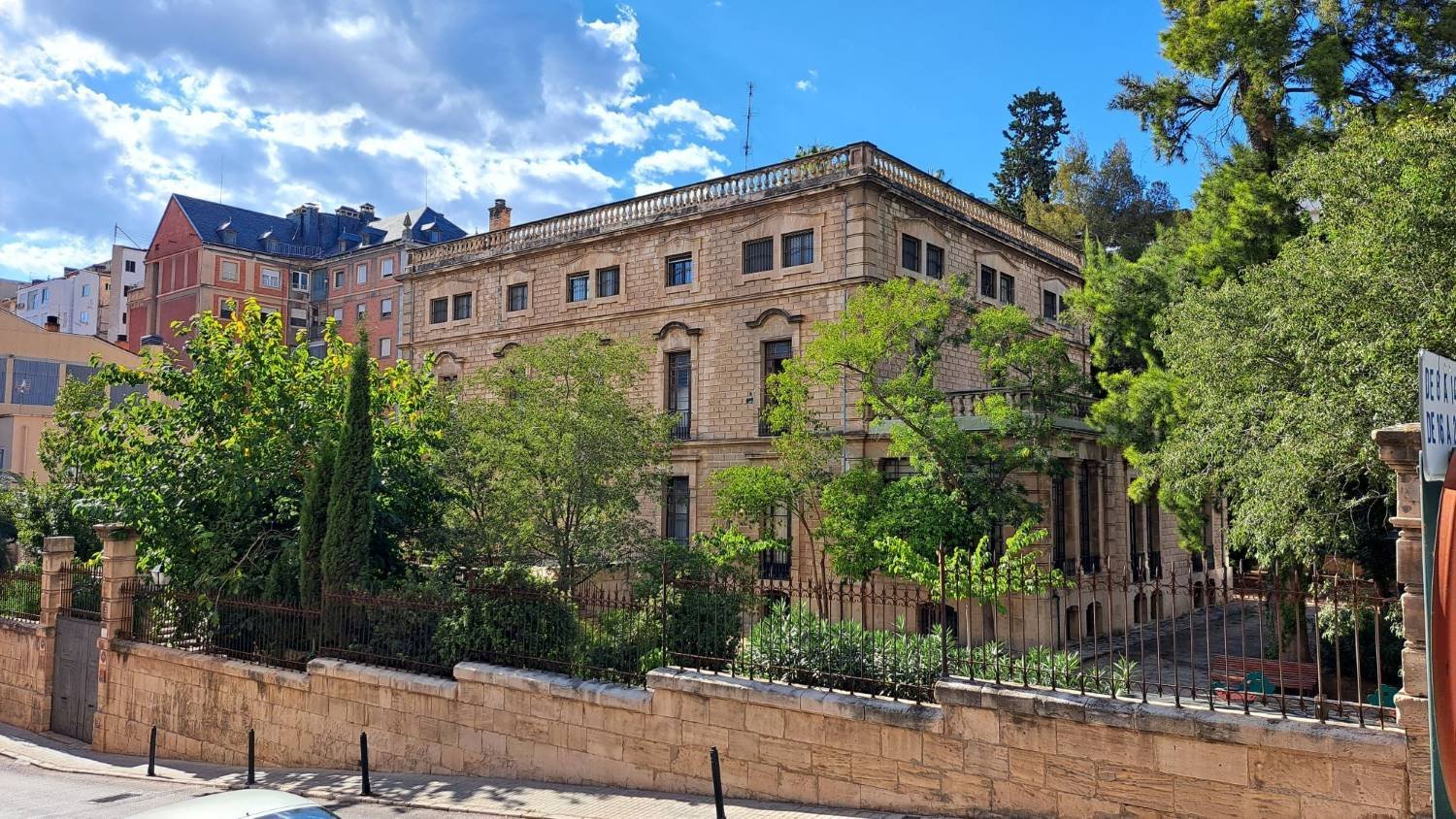
A green, mountainous district built around Alcoy, known for its industrial history and its Moorish-Christian festivals, sitting between the Serra de Mariola and Font Roja natural parks.
Alcoy’s foreign-resident population stands at 10.4% (INE, 01/01/2024), confirming this comarca’s profile as a primary-residence market rather than an international one.
Market reality: dominated by local primary residences, with a specialized niche in rural tourism assets.
A genuine option for boutique hospitality investors or lifestyle buyers seeking authentic mountain living, rather than a coastal alternative.
9. El Comtat — The Quietest comarca
The northernmost inland district, with Cocentaina as its historic capital, surrounded by terraced valleys, olive mills, and small mountain towns like Agres.
Cocentaina’s foreign-resident share is 11.6% (INE, 01/01/2024), reinforcing that this is the quietest comarca on the international-buyer map, for now.
Market reality: exceptional value, driven by an almost complete absence of mass tourism.
Historic manor homes and stone fincas requiring restoration are available at some of the lowest entry costs in the province. This is a comarca that rewards buyers willing to invest time in restoration, not a quick-turnaround market.
Matching your strategy to the map
There is no single “best” comarca, only the one that matches your capital, risk tolerance, and lifestyle goals.
Buyers targeting seasonal yield or a turnkey villa within an established international network should concentrate on La Marina Alta or La Marina Baja (Marina Baixa, in local Valencial language).
Buyers prioritizing square footage per euro, retirement purchasing power, or a genuine restoration project will find better terms in the Vinalopó valleys or the mountain comarcas of L’Alcoià and El Comtat.
This overview is the map, not the terrain.
In the coming articles in this series, I’ll go comarca by comarca, then town by town, and eventually down to the micro-zones and neighbourhoods that actually determine value: the streets, the developments, and the details a listing photo never shows.
Join The Discussion